
-
Fall Planted Bulbs
-
Daffodils
-
Iris
-
Tulips
PerennialsGardening InformationSpring Planted Bulbs (out of season)-
Begonias
-
Dahlias
-
Gladiolus
-
Lilies
- Log in
-

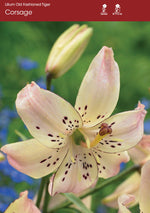
Corsage
$11.75
Unit price / perSign up to be the first to know when it's back in stock.
Shipping Starts: Sold out for season 2026
Quantity per Package: 2 Bulbs
Light Required: Full Sun / Partial shade
Height: 40-48"
Blooming Period: Jun - Aug
Bulb size: 16/18
Planting Distance: 8"
Planting Depth: 6"
Hardness Zone:
Deer Resistant: No
Minimum Bulbs for Effect:
About Corsage
Old-Fashioned Tiger Lily Corsage brings classic beauty to your garden. Its delicate, fragrant flowers create a timeless charm, perfect for borders, beds, or containers. This easy-to-grow lily adds elegance and color, making your outdoor space feel fresh and inviting. Its color can be described as soft pink blended with soft yellow.
- Fragrant blooms: enjoy soft, sweet scents that attract pollinators
- Long flowering period: blossoms appear from mid to late summer
- Easy to grow: ideal for beginner and experienced gardeners
- Versatile placement: grows well in garden beds, borders, or pots
-
Resilient: withstands various soil types and moderate weather conditions
How to plant and take care of Old-Fashioned Tiger Lily Corsage:
- Plant bulbs 4-6 inches deep in well-draining soil
- Space bulbs 8-12 inches apart to allow growth
- Choose a spot with full sun to partial shade
- Water regularly, keeping soil moist but not soggy
- Apply a balanced fertilizer in spring for strong stems and blooms
- Remove faded flowers to encourage continuous flowering
FAQs
The best potting soil for Corsage Lilies is one that offers excellent drainage while retaining enough moisture to keep the bulbs healthy. Corsage Lilies thrive in a light, well-aerated, and nutrient-rich soil. A mix that combines peat moss, perlite, and composted organic matter works exceptionally well, as it ensures proper root development and prevents waterlogging, which can lead to bulb rot. Adding a slow-release, balanced fertilizer can further enhance growth and flowering. Avoid heavy clay soils, as they retain too much water and hinder drainage. For container planting, using a premium, loose, and slightly acidic potting mix encourages vibrant blooms and robust plant health.
Yes, Corsage Lilies often bloom in their first year, but this depends on the quality of the bulbs and planting conditions. Large, healthy bulbs planted in nutrient-rich soil with sufficient sunlight usually produce flowers within the first growing season. Optimal conditions include full to partial sun, moderate watering, and well-draining soil. Stress factors such as poor soil, overcrowding, or insufficient light can delay blooming until the second year. First-year blooms might be fewer in number, but once established, Corsage Lilies can produce more flowers each year. Ensuring proper planting depth and spacing also supports early blooming and long-term plant vitality.
Yes, Corsage Lilies are perennial plants, meaning they naturally return year after year when properly cared for. Once planted, they establish a strong bulb system that stores energy over the dormant season, enabling the plant to regrow and bloom each spring or summer. However, longevity and recurring blooms depend on factors such as soil quality, sunlight exposure, and adequate watering. Dividing crowded bulbs every few years also encourages healthier plants and more vibrant flowers. Mulching around the bulbs during winter protects them from extreme cold, ensuring they survive through seasonal changes and return reliably with beautiful blooms each year.
For the best visual impact, planting Corsage Lily bulbs in clusters of three to five is ideal. This allows each plant enough space to grow while creating a full, natural display of flowers. Overcrowding bulbs can lead to poor growth, reduced blooms, and increased susceptibility to diseases. When planting multiple bulbs together, maintain a spacing of about 6 to 8 inches between bulbs to allow roots to expand and soil to remain aerated. For larger garden beds or dramatic displays, groups of seven to ten bulbs can create a lush floral effect. Proper spacing ensures each Corsage Lily reaches its full potential while producing abundant, healthy flowers.
DutchFlowerBulbs
DutchFlowerBulbs ships Premium Quality Flower Bulbs straight from Holland to your garden!
Customer Support