
-
Fall Planted Bulbs
-
Daffodils
-
Iris
-
Tulips
PerennialsGardening InformationSpring Planted Bulbs (out of season)-
Begonias
-
Dahlias
-
Gladiolus
-
Lilies
- Log in
-

Wine Festival
$7.99
Unit price / perSign up to be the first to know when it's back in stock.
Shipping Starts: Shipping started!
Quantity per Package: 1 Big Tuber
Light Required: Full Sun / Partial Shade
Height: 24-26"
Blooming Period: May - Jun
Bulb size: I (Top Size)
Planting Distance: 18"
Planting Depth: 1"
Hardness Zone:
Deer Resistant: Yes
Minimum Bulbs for Effect: 1-2
About Wine Festival
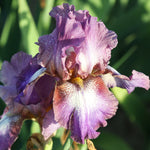
The Bearded Iris Wine Festival is a rich and expressive garden favourite that stands out with light wine-toned and white blooms. Its velvety petals unfold in layered ruffles, blending shades of burgundy, plum, and violet for a dramatic and luxurious effect in the garden. This iris adds instant depth to borders, flower beds, and cutting gardens, while also attracting attention as a striking focal point. Strong, reliable, and easy to grow, Bearded Iris Wine Festival delivers bold seasonal impact with very little effort.
- Wine colored blooms: light plum tones with a velvety, luxurious white finish
- Ruffled petals: elegantly layered flowers that create a full and dramatic shape
- Strong garden presence: tall, upright growth that adds structure to borders and beds
- Long lasting display: blooms return yearly with reliable and abundant flowering
- Cutting garden value: perfect for creating bold, elegant indoor arrangements
- Pollinator attraction: supports bees and adds life to the garden ecosystem
- Has a sweet fragrance
How to plant and take care of Bearded Iris Wine Festival:
- Planting depth: place rhizomes just at soil level with the top slightly exposed to prevent rot
- Sun exposure: choose a sunny position to enhance flowering strength and color intensity
- Soil quality: use well-draining soil, preferably slightly sandy, to keep roots healthy
- Watering needs: water after planting, then only during prolonged dry periods
- Seasonal care: remove spent flower stems and keep foliage tidy after blooming
- Plant maintenance: divide rhizomes every few years to maintain strong and consistent flowering
FAQs
The best potting soil for Bearded Iris 'Wine Festival' tubers is a free-draining, airy mix that prevents water from sitting around the rhizomes. Bearded irises are highly sensitive to excess moisture, and poor drainage is the most common cause of rot. A suitable mix usually includes standard potting soil combined with coarse sand, perlite, or fine gravel to improve structure and drainage. The goal is to create a light, crumbly texture that allows water to pass through quickly while still holding enough nutrients for growth.
A slightly alkaline to neutral soil pH is ideal, typically around 6.5 to 7.0. Many gardeners improve store-bought compost by mixing in 30–50% mineral material such as grit or perlite. This helps mimic the natural growing conditions of bearded irises, which prefer dry, sunny environments rather than rich, moisture-retentive soil. It is also essential that the rhizomes are not buried deeply—keeping them partially exposed at the soil surface helps prevent rot and encourages strong flowering performance.
Bearded Iris 'Wine Festival' tubers can bloom in the first year, but this depends on growing conditions and planting time. In many cases, newly planted rhizomes focus their energy on establishing strong roots and healthy leaf growth during their first season. Because of this, flowering may be limited or even absent in year one, which is completely normal for bearded irises.
If conditions are ideal—full sun, excellent drainage, and correct shallow planting—some blooms may still appear in the first year, especially if the rhizomes were planted early and are healthy. However, the most reliable and abundant flowering typically begins in the second growing season. Once established, the plant produces more fans and flower stalks each year, leading to a much more impressive display over time. First-year performance should be viewed as establishment rather than full flowering potential.
Yes, Bearded Iris 'Wine Festival' tubers are perennial plants, meaning they return year after year when grown in suitable conditions. Once established, the rhizomes survive winter and regrow each spring, producing fresh foliage and new flowers during the blooming season. Over time, each rhizome produces offsets, gradually forming larger clumps that increase flowering capacity.
These irises are long-lived in the garden, often thriving for many years without needing replacement. However, to maintain strong flowering performance, it is recommended to divide the clumps every 3 to 5 years. Without division, overcrowding can reduce blooms and weaken plant health. With proper care—full sun, well-drained soil, and occasional division—Bearded Iris 'Wine Festival' will reliably return each year and often become more vigorous over time.
For the best visual impact, it is recommended to plant Bearded Iris 'Wine Festival' tubers in groups of 3 to 5 rhizomes. Planting in clusters creates a fuller, more dramatic floral display compared to single rhizomes, which can look sparse in the early years. Group plantings also help establish a strong focal point in borders or flower beds.
Spacing is still important even when planting in groups. Each rhizome should be placed about 30 to 45 cm apart to ensure good air circulation and reduce the risk of rot or disease. Over time, each rhizome will multiply and form larger clumps, naturally filling in the space and creating a dense, attractive planting. Even starting with a small group will expand significantly over a few seasons, making irises a great long-term investment for garden structure and color.
DutchFlowerBulbs
DutchFlowerBulbs ships Premium Quality Flower Bulbs straight from Holland to your garden!
Customer Support